International Conference on Artificial Intelligence and Communication Technology (ICAICT2026)


Keynote Speakers


Keynote Speakers


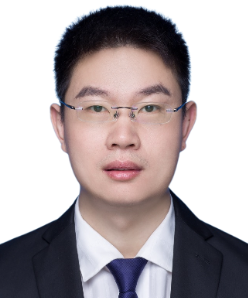
Dongrui Wu
Huazhong University of Science and Technology, China


Dongrui Wu (Fellow, IEEE) received a B.E in Automatic Control from the University of Science and Technology of China, Hefei, China, in 2003, an M.Eng in Electrical and Computer Engineering from the National University of Singapore in 2006, and a PhD in Electrical Engineering from the University of Southern California, Los Angeles, CA, in 2009. He is now Chair Professor and Vice Dean of School of Artificial Intelligence and Automation, Huazhong University of Science and Technology, Wuhan, China. His research interests include brain-computer interface and machine learning. He has more than 200 publications (18000+ Google Scholar citations; h=70), with 7 outstanding paper awards from IEEE. His team won National Champion of the China Brain-Computer Interface Competition in seven successive years (2019-2025). He is the Editor-in-Chief of IEEE Transactions on Fuzzy Systems.


Aleksandra Klašnja-Milićević
Full Professor of Computer Science Faculty of Sciences, University of Novi Sad, Serbia


Aleksandra Klašnja-Milićević is a Full Professor and Head of the Master’s Studies in Informatics at the Faculty of Sciences, University of Novi Sad, Serbia. She has also held several visiting academic positions at the Australian Institute of Higher Education in Sydney, Australia, strengthening international collaboration in teaching and research.

She received her B.Sc. degree in Electrical Engineering and Computer Science from the Faculty of Technical Sciences, University of Novi Sad, in 2002. In 2003, she joined the graduate program in Computer Science at the Faculty of Sciences, Department of Mathematics and Informatics, University of Novi Sad, where she obtained her M.Sc. degree in 2007 and her PhD degree in 2013.

Professor Klašnja-Milićević’s research focuses on e-learning and personalization, educational technologies, educational data mining, learning analytics, applied artificial intelligence, and recommender systems. Her work is particularly oriented toward the design and evaluation of adaptive and intelligent learning environments, as well as the responsible and effective integration of AI technologies in education.

She has been actively involved in numerous international and bilateral research projects, often serving as Principal Investigator, including projects in collaboration with institutions from Australia, Italy, Switzerland, Slovakia, Romania, and Serbia. These projects address topics such as adaptive web-based learning systems, technology-enhanced learning, advanced human-computer interaction, and innovative curricula in computer science and software engineering.

Professor Klašnja-Milićević has made significant contributions to the international research community through her editorial and organizational roles. She has served as an Associate Editor of the KES Journal and as a Guest Editor for several international journals, including Sustainability, Education Sciences, Discover Education, and Frontiers in Artificial Intelligence. She is also a regular member of program committees for international conferences in the fields of artificial intelligence, educational technology, and intelligent systems.

She has edited four international handbooks, authored one research monograph, and published more than 60 peer-reviewed papers in high-ranking international journals and conferences. Her research has attracted broad international attention, with a Google Scholar h-index of 21, an i10-index of 36, and over 3000 citations.

Through her academic leadership, research excellence, and international engagement, Professor Klašnja-Milićević actively contributes to shaping future directions in AI-enhanced education, personalized learning, and intelligent educational systems.

Title: Generative AI in Healthcare,  IT Sector, e-Education: Opportunities, Challenges, and Future Directions


Rahul Kumar JAIN, PhD
R&D | Computer Vision | AI Engineer, Tiwaki Co., Ltd, Kusatsu, Japan


Deep learning-based methods for image processing have achieved state-of-the-art performance across various tasks. However, these models are typically trained in controlled environments where the training and testing data are assumed to be independent and identically distributed (i.i.d.). In real-world scenarios, this assumption often fails due to variations in image acquisition, such as differences in camera viewpoints, medical centers, scanning protocols, and image modalities. These variations can significantly degrade model performance, a challenge known as the domain shift or domain gap issue. Another major challenge is the lack of sufficient training data, as it is often difficult to acquire center-specific data needed for fine-tuning the model.

Domain Adaptation (DA) and Domain Generalization (DG) methods are designed to address this problem. DA focuses on transferring knowledge from labeled source domain to a specific target domain, using unlabeled data from the target domain, while DG aims to train a model on multiple source domains to generalize effectively to unseen target domains. This talk explores effective solutions to domain shift across various scenarios and settings, including the integration of recent advanced techniques such as federated learning and multimodal information.

Biography: Rahul Jain received his Ph.D. degree from Ritsumeikan University, Japan, in 2022. He served as an Assistant Professor at the College of Information Science and Engineering, at Ritsumeikan University Japan from April 2022 to March 2025. Currently, he is working as an R&D and AI Engineer at Tiwaki Co., Ltd., Japan. He is also a Visiting Researcher at Ritsumeikan University, Japan. He has published research papers in reputed international journals, including IEEE TETCI, and leading international conferences such as MICCAI. He has also co‑authored two Springer books and book chapters. His research interests include the design and development of AI paradigms and applications, computer vision, deep learning, and image processing.

Title: Domain Adaptation and Generalization Techniques to Address Domain Shift in Real-World Imaging